Article
Preparing the article…
If a translation is needed, this may take a few seconds.
If a translation is needed, this may take a few seconds.
In the Beni health zone alone, 4,029 people are living with HIV today, according to supervising nurse Damien Kambale.
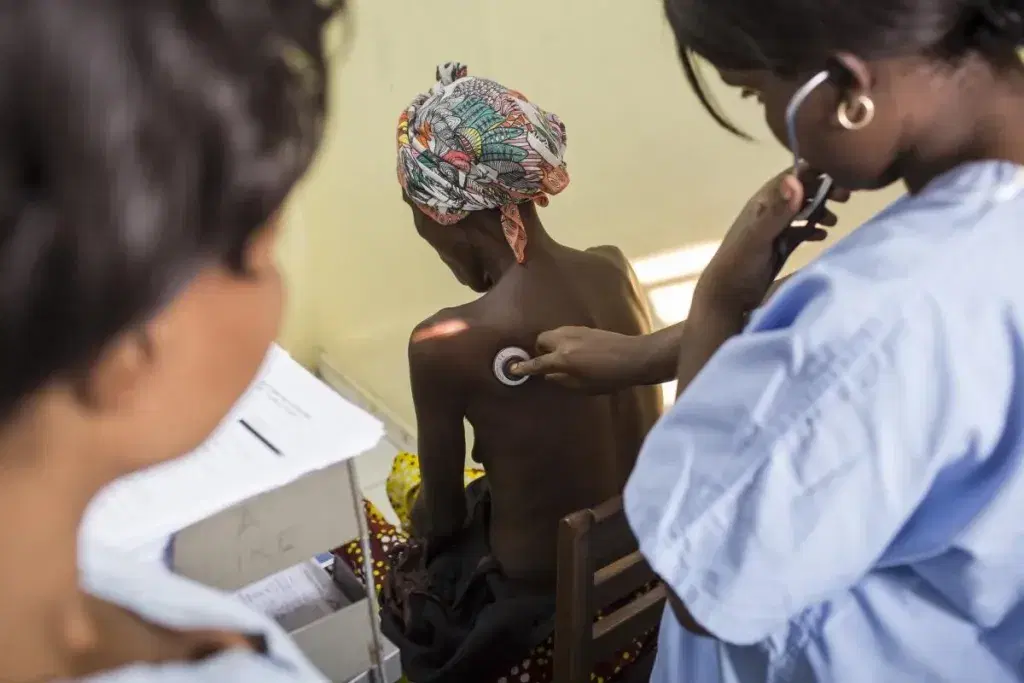
On the occasion of World AIDS Day, celebrated on December 1st, health authorities in Greater North Kivu presented a detailed update on the situation. In the Beni health zone alone, 4,029 people are living with HIV today, according to supervising nurse Damien Kambale.
Among those being followed, women remain in the majority: 2,618 compared to 1,411 men. Adults aged 25 to 49 years represent the most affected category, with 1,940 patients on antiretrovirals, followed by those over 50 years old, who number 968 patients. The disease also affects closed settings: 35 inmates at Kangwayi prison are currently undergoing treatment.
Doctor Nicaise Mathé, coordinator of the National AIDS Control Programme in Greater North Kivu, emphasizes the "significant advances" achieved through combined prevention: institutional strengthening, free antiretrovirals and medical support, as well as strong community mobilization.
He assures that these advances make it possible to envision a Democratic Republic of Congo without HIV by 2030, in accordance with the national theme: "An equitable response for a DRC without HIV-AIDS".
However, the launch of awareness activities planned for this month is experiencing delays due to difficulties in supplying materials: t-shirts, caps, condoms and rapid tests. The PNLS (National AIDS Control Programme) mentions a possible postponement of public activities of "two weeks".
The Beni health zone has just received two MPIMA devices, installed at the general hospital and the Mabakanga health center. They will make it possible to assess viral load after six months of treatment, a key step to confirm virus undetectability, an essential condition for greatly reducing transmission risks.
Despite prevention actions, 43 new cases were recorded last month, a sign that HIV continues to circulate in the region. Authorities remind that 13 health structures provide free testing and care for patients, from Butsili to Païda passing through Ngilinga, Malepe, Kanzulinzuli and the general hospital.
Health officials insist on three major recommendations: get tested early, avoid consulting traditional healers and combat all forms of stigmatization. They recall that HIV "is neither transmitted through meals nor through cohabitation". They also warn against certain churches that encourage patients to abandon their treatment, a practice deemed "dangerous".
Gloire Tsongo GT
Our editors' picks of what matters. Monday to Friday.
By subscribing, you accept our privacy policy.