Article
Preparing the article…
If a translation is needed, this may take a few seconds.
If a translation is needed, this may take a few seconds.
In its first participation in Gambian legislative elections, the National People's Party of President Adama Barrow, created in late 2020, secured only 18 of the 53 seats in the chamber. With our correspondent in Banjul, Milan Berckmans First observation: only one voter in two cast their ballot. Legislative elections struggle…
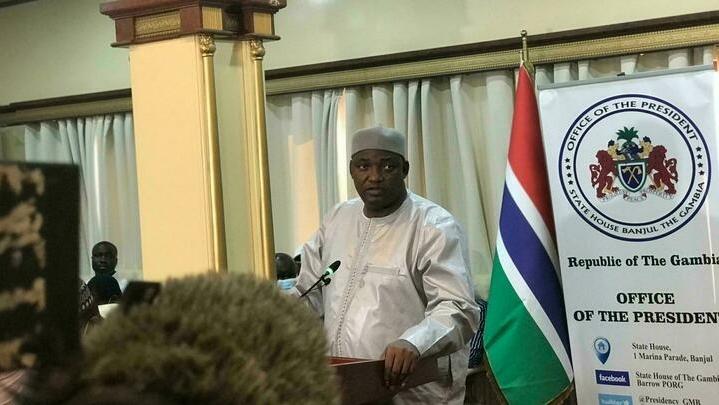
With our correspondent in Banjul, Milan Berckmans
First observation: only one voter in two cast their ballot. Legislative elections continue to struggle to mobilize voters in Gambia, particularly in rural areas. This low turnout has primarily worked against President Adama Barrow and his party.
After his resounding success in the presidential election and a second term secured with 53% of the vote last December, the Gambian president wanted to obtain a strong majority, but instead he inherits a fragmented Parliament. While the ruling party can count on a four-party alliance that should bring him the support of around thirty deputies, he is still far from an absolute majority.
Yet, to carry out his major reforms, notably the constitutional revision that should make it possible to lift the immunity of former presidents or to limit the number of terms, the support of at least 39 of the 53 deputies will be essential.
According to Sait Matty Jaw, a political science researcher, this new configuration foreshadows further blockages within the chamber. For the future majority, it will therefore be necessary to convince deputies to obtain real progress, and finally to make concrete the hopes born after the departure of Yahya Jammeh in 2017.
Our editors' picks of what matters. Monday to Friday.
By subscribing, you accept our privacy policy.