Article
Preparing the article…
If a translation is needed, this may take a few seconds.
If a translation is needed, this may take a few seconds.
General Dagvin RM Anderson explicitly mentioned the Lobito corridor as one of the most concrete examples of AFRICOM's new approach, which closely links security and economic development.
During the first digital press briefing of the year, Tuesday, February 3, 2026, General Dagvin RM Anderson, commander of the United States Africa Command (AFRICOM) since August 2025, and Sergeant Major Garric M. Banfield presented the priorities for the year, with an emphasis on the convergence between security and economic prosperity in Africa.
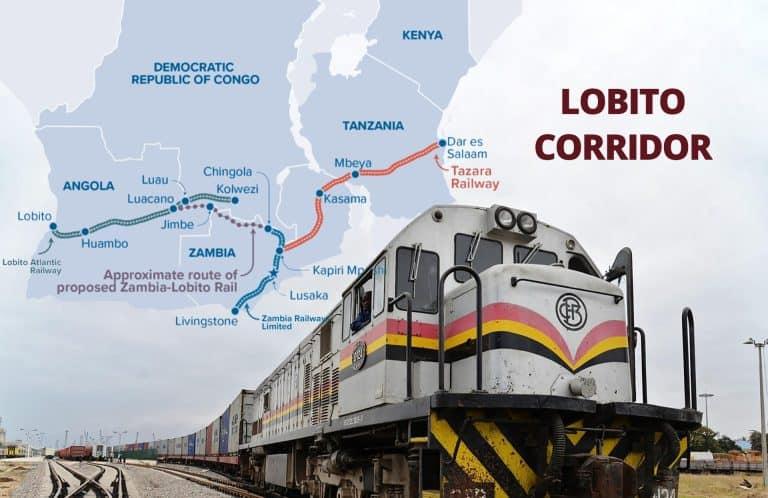
General Dagvin RM Anderson explicitly mentioned the Lobito corridor as one of the most concrete examples of AFRICOM's new approach, which closely links security and economic development. This railway and logistics project, connecting the copper and cobalt mines of the Democratic Republic of the Congo and Zambia to the Angolan port of Lobito on the Atlantic, has become a symbol of the convergence between security stability and investment opportunities.
"We are examining areas like the Lobito corridor, which encompasses not only the port, but also the rail network, mining and related infrastructure," General Anderson stated.
According to him, securing this strategic axis threatened by armed groups in certain border areas and by risks of regional destabilization makes it possible to create an environment conducive to private and public investment.
"Security breeds stability; this stability creates investment opportunities; and these investments generate prosperity for both our African partners and the United States," he repeated on several occasions.
The AFRICOM commander emphasized that this corridor is not only an economic infrastructure, it represents a lever of sovereignty for Angola, the DRC and Zambia, by offering an alternative to traditional routes passing through East or Southern Africa.
In 2025, progress has already been made, notably the rehabilitation of the railway line, strengthening of port capacities and the signing of multilateral agreements. But General Anderson stressed that the sustainability of these gains depends on enhanced security, notably through partnerships with local armed forces and shared capacities in intelligence and surveillance.
General Dagvin RM Anderson, commander of the United States Africa Command (AFRICOM) and Sergeant Major Garric M. Banfield placed the African Lion exercise at the center of priorities for 2026. Faced with the rise of transnational terrorist threats from ISIS, Al-Qaeda and their affiliates, this multinational exercise, scheduled for May in Morocco, embodies AFRICOM's ambition to strengthen interoperability, innovate in the fight against regional threats and consolidate lasting partnerships across the continent.
African Lion 2026 promises to be the most ambitious in the recent history of the command. It will bring together 19 African countries, six European countries, as well as partners from South America, the Middle East and other Indo-Pacific regions. The exercise will take place mainly in Morocco, with activity hubs in Tunisia, Ghana and Senegal, in order to address the regional dimension rather than limiting itself to a single country.
This multilateral structure will make it possible to simulate complex scenarios: joint command and control operations, field training, live fire exercises, combined air-ground-sea maneuvers, cyber defense and humanitarian crisis management. General Anderson was keen to emphasize the symbolic significance of this event.
"As the United States prepares to celebrate its 250th anniversary, being able to conduct African Lion in Morocco is particularly important," he said.
Sergeant Major Banfield added emphasis on mutual learning. "Multinational operations are extremely complex, as we have seen over the past twenty years. It is essential to practice them regularly to strengthen interoperability between our partners," he explained.
African Lion will thus offer African, European and allied forces the opportunity to train together in realistic environments, share best practices and improve tactical and strategic coordination. Beyond the purely military aspect, the exercise is part of the broader vision defended by General Anderson: to create a virtuous circle where security fosters stability, attracts investment and generates prosperity.
Our editors' picks of what matters. Monday to Friday.
By subscribing, you accept our privacy policy.