Article
Preparing the article…
If a translation is needed, this may take a few seconds.
If a translation is needed, this may take a few seconds.
Since the escalation of the conflict in eastern Democratic Republic of Congo (DR Congo) in February 2025, marked by the capture of the strategic cities of Goma and Bukavu by AFC-M23 rebels, the local economy of Gatumba, a border zone located in western Burundi, is in free fall.
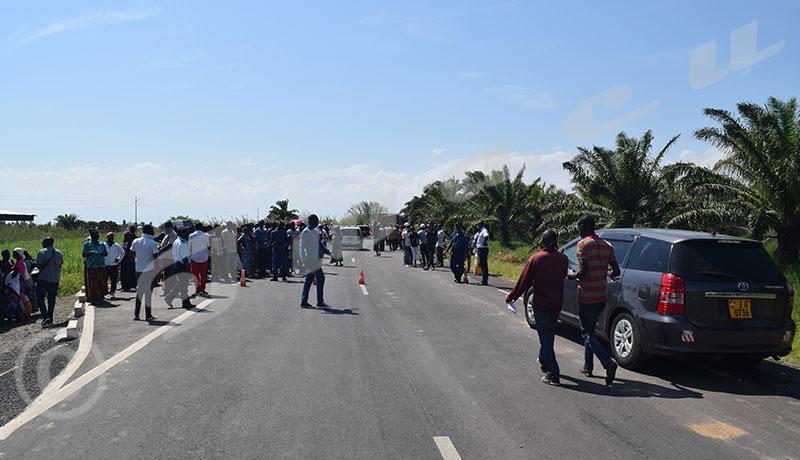
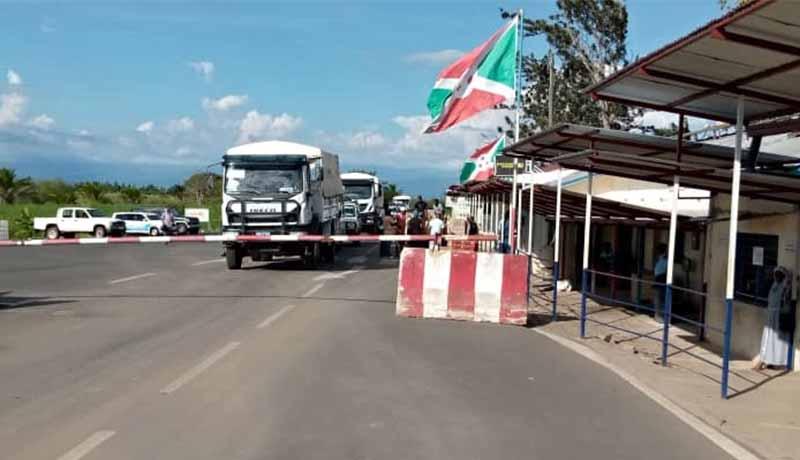
Since the escalation of the conflict in eastern Democratic Republic of Congo (DR Congo) in February 2025, marked by the capture of the strategic cities of Goma and Bukavu by AFC-M23 rebels, the local economy of Gatumba, a border zone located in western Burundi, is in free fall. National road number 4, linking Gatumba to Bujumbura and to Uvira, a border city of DR Congo, is a vital commercial axis for many Burundian families.
However, the fighting in the region has seriously disrupted cross-border exchanges, particularly affecting trade and transport, which constitute the main sources of income for residents of this zone. Chantal Nahimana, a bicycle courier operating on the Bujumbura-Uvira axis, embodies the difficulties faced by these workers.
Living with a disability, she testifies to the devastating consequences of the conflict on her activity and that of her colleagues. "My work consists of transporting goods to DR Congo: flour, water, juices, sugar, and sometimes other essential products. Before the war, I could make up to three round trips per day, which allowed me to meet my family's needs. But since the intensification of the conflict, everything has changed," she explains bitterly.
Read also: Reopening of the Gatumba border: what will Burundi gain from it?
According to Ms. Nahimana, the clientele, predominantly composed of Congolese merchants and small resellers, has drastically shrunk. Fear of violence, movement restrictions, and growing insecurity in eastern DR Congo have led to a significant drop in demand.
Beyond the transport sector, local merchants in Gatumba lament a drastic drop in their income due to the absence of Congolese customers. According to them, in recent times, "ghost town" days and demonstrations organized in Uvira, a border city of the Democratic Republic of Congo (DR Congo), have paralyzed business on national road number 4 linking Gatumba to Uvira.
Emmanuel Sadiki, a butcher in Gatumba, expresses his regret over losses suffered during these periods of unrest in Uvira. He explains that the majority of his customers are Congolese who cross the Kamvimvira-Gatumba border daily to shop in Burundi.
"We are seeing a considerable reduction in clientele because of the conflicts reported in this neighboring country. People no longer come in large numbers because of the war. Before, Congolese arrived in droves and bought many products, but now they only come in a trickle. Only those who live near the border continue to come. Customers from inside the country have disappeared," confides Mr. Sadiki.
The conflict in eastern DR Congo also affects cross-border merchants who supply themselves in Burundi. These latter face difficulties returning home, often under threat of gunfire, in addition to facing a shortage of customers, with residents remaining locked in their homes for fear of violence.
Esperance Mariam, a Congolese vegetable seller who supplies herself in Gatumba, testifies to the obstacles she encounters in returning to DR Congo.
"We come from Congo to buy vegetables in Burundi. Thank God, we often find them and we resell them at home. But the main challenge is the lack of customers. We are forced to do ambulant trade. Sometimes we wake up under gunfire: either we come to Burundi, or we stay at home. On our return, it's the same thing, bullets whistle, and we must choose between returning or remaining blocked," she explains.
The Gatumba zone represents one of Burundi's economic lungs, its activities contributing significantly to national tax revenues. However, local merchants emphasize their urgent need for financial support and lasting peace on both sides of the border to fully exercise their activities, testifies a bicycle courier operating on the Bujumbura-Uvira axis.
According to her, "What I would recommend to the authorities is to recognize that, like in Congo, we are struggling to survive. Financial support would alleviate our burden and guarantee the economic stability of our families. But above all, peace is essential for our activities. In a climate of insecurity, do you think I can venture out? With my disability, I cannot even run. If I fall, I have no means of getting back up. Those who pass after me would trample me to move forward. Do you not see how crucial peace is? It is through peace that we can go out into the street to seek what we need to survive."
According to statistics from the Burundi Revenue Office (OBR) for the fourth quarter of 2023, more than 89% of Burundi's exports to Central African countries were destined for DR Congo, making this country a key market for Burundian products. Moreover, many Burundian merchants, notably cloth sellers, supply themselves in DR Congo, illustrating the importance of cross-border exchanges for the local economy.
Our editors' picks of what matters. Monday to Friday.
By subscribing, you accept our privacy policy.