Article
Preparing the article…
If a translation is needed, this may take a few seconds.
If a translation is needed, this may take a few seconds.
With at least 306 dead, the toll keeps climbing after violent rains that lasted several days in KwaZulu-Natal province. On the ground to assess the damage on Wednesday, President Cyril Ramaphosa met with bereaved families. With our special correspondent in KwaZulu-Natal,…
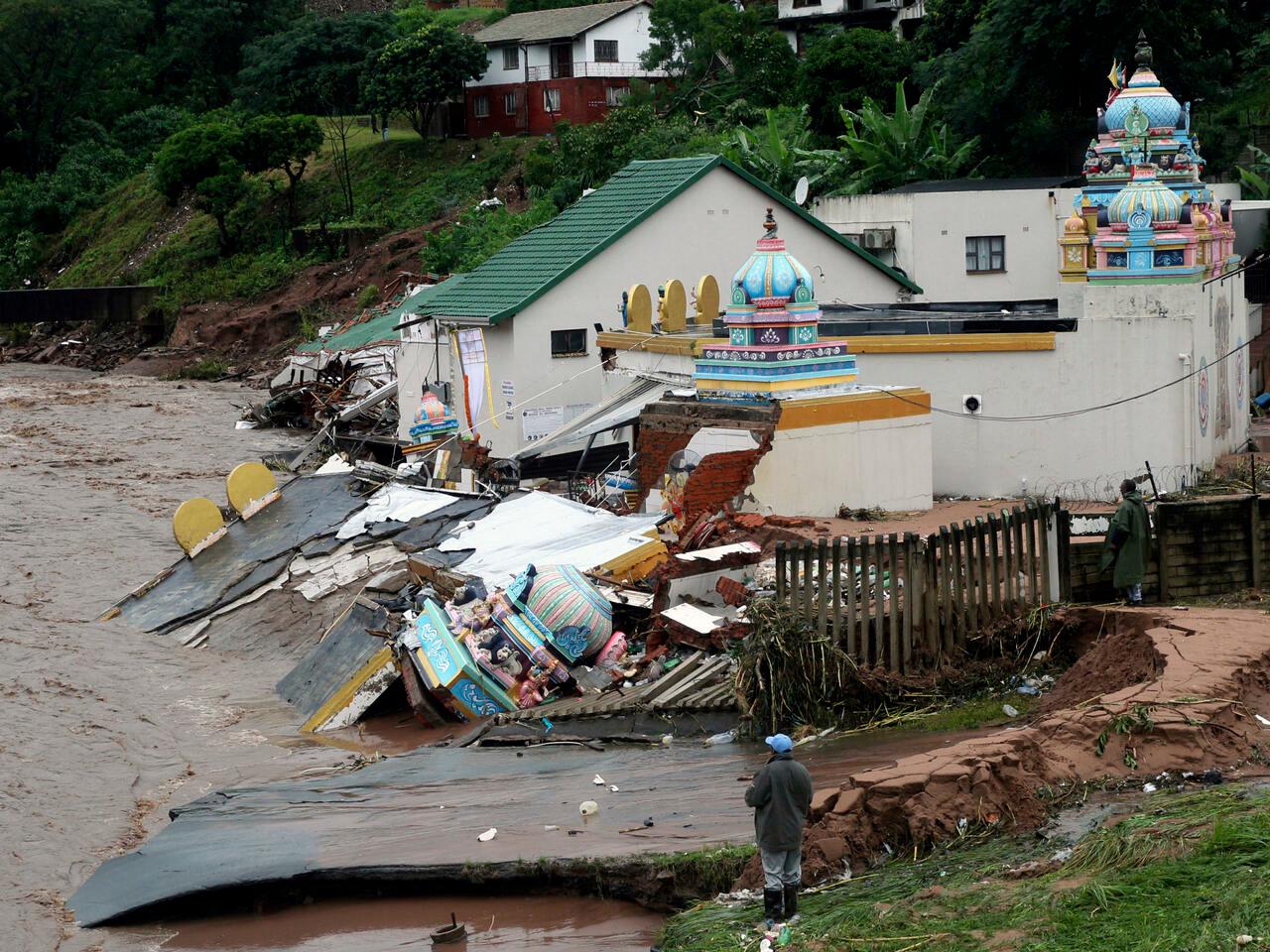
With our special correspondent in KwaZulu-Natal, Romain Chanson
Trevor strives to keep smiling, despite all his misfortunes; no lives were lost in his family, and it came close: a landslide nearly swept away his house.
"Monday evening, I was in my bedroom watching television when we heard a loud noise. I opened the door to take a look: the front yard had disappeared, we were left with just two steps, then nothing. This is the first time this has happened and it's frightening. We've had heavy rains in the past, but not like these," he explains.
►Also read: South Africa: heavy rains have caused deadly floods in KwaZulu-Natal
Like many South Africans, Trevor has no insurance. All repairs will have to come out of his own pocket. The damage throughout KwaZulu-Natal province is considerable, explains Shamlin, who heads a citizen watchdog group in a coastal municipality. "Houses have been swept away, drivers have been swept away, cars have been stuck in mud, there have been landslides. And we're only on the second day. The more they clean up, the more we risk discovering the damage and finding bodies," he laments.
On social media, families are sharing their phone numbers to help find missing relatives, hoping that those absent have gone to take shelter.
President Cyril Ramaphosa was in the region to assess the damage on Wednesday. Better weather allowed the city of Durban and its surroundings to begin to catch their breath. It was the last night of patrols for the citizen brigades that had guarded the entrance to the expressway that borders the Indian Ocean. The road should reopen, but it had been closed after being underwater for several days. Containers had floated there before washing up on the road. President Cyril Ramaphosa even flew over these industrial areas where containers were scattered by the current like driftwood on the beach. An impressive image that he photographed.
Despite a few blocked road sections, traffic is possible; the airport remained open. The provincial department of cooperative governance is calling for patience; municipal services such as electricity, water, and garbage collection have resumed in some places but teams are extremely stretched. The same is true for morgues, whose funeral vehicles are running short of capacity to collect bodies; the police must handle this in some places. Speed is essential since rain is expected to return starting Friday and for five days.
Our editors' picks of what matters. Monday to Friday.
By subscribing, you accept our privacy policy.